If you are shopping for a home in Summerlin, it is easy to assume every neighborhood comes with the same HOA setup and the same amenity access. In reality, Summerlin is more layered than that, and understanding those layers can help you avoid surprises after you move in. This guide will walk you through how HOAs and amenities work in Summerlin, what fees may cover, and what to verify before you buy. Let’s dive in.
How Summerlin HOA Structures Work
Summerlin does not operate under one simple, universal HOA model. The community includes different neighborhoods, resident-only amenities, and separately developed areas, so the association structure can vary from one property to the next.
In many cases, a home may be part of a master association, a sub-association, or another separate community structure. Official Summerlin materials also identify Siena and Sun City Summerlin as separately developed and managed communities that are not part of the Summerlin Master Association. That means you should confirm the exact setup tied to the specific home you are considering.
Summerlin Council plays an important role in the community experience. It is the nonprofit arm of the Summerlin Community Association and supports resident programming, classes, camps, seasonal events, rentals, and shared amenities.
What Amenities Summerlin Is Known For
Summerlin offers a broad mix of lifestyle features that attract many buyers to the area. Official community materials describe more than 300 parks, more than 200 miles of trails, ten golf courses, schools, a public library, a performing arts center, neighborhood shopping, and Downtown Summerlin.
Downtown Summerlin is described by the community as a walkable urban core with more than 125 retail and restaurant brands, along with City National Arena and Las Vegas Ballpark. These larger area features help shape the Summerlin lifestyle, but they are not the same thing as HOA-included amenities.
The trail system is one of the most noticeable community features. Summerlin states that the trails support walking, jogging, biking, and neighborhood connectivity, and the system is designed to connect with the broader valley trail network over time.
Resident-Only vs Public Amenities
This is where many buyers need extra clarity. Not all Summerlin amenities are HOA-exclusive, and not all of them are available to every resident in the same way.
Summerlin says it has four resident-only private community centers. Three include Olympic-sized pools, and the centers host classes, celebrations, events, and private rentals for residents. The fourth center in The Gardens does not have its own pool, but it is surrounded by outdoor amenities.
At the same time, some community facilities are public rather than resident-only. Summerlin states that Veterans Memorial Leisure Services Center and Pool and Aquatic Springs Indoor Pool were developed through agreements with local municipalities and are operated by the City of Las Vegas and Clark County, making them open to the public regardless of Summerlin residency.
The key takeaway is simple: amenity access depends on the specific property and community structure. You should verify whether an amenity is resident-only, public, privately managed, or tied to a separate association.
What HOA Fees May Cover
In Nevada common-interest communities, owners generally pay their share of common-element expenses. Based on Nevada Real Estate Division educational materials, those expenses often include landscaping, shared amenity operations, reserves, management, and other association costs.
Monthly assessments are common, but they are not always fixed forever. Nevada materials explain that boards may change and increase assessments, and special assessments may be levied for extraordinary expenses or reserve shortfalls.
For some Summerlin properties, HOA dues may not be the only recurring community-related cost. Summerlin also notes that certain properties may have a special improvement district, or SID, assessment that is separate from HOA dues.
How SID Assessments Fit In
A SID assessment is different from an HOA fee, and it is worth asking about early in your home search. According to Summerlin’s SID FAQ, these districts help fund public infrastructure such as roads, curbs, sidewalks, and utilities.
The assessment is paid by the property owner and billed semi-annually through the City of Las Vegas or Clark County. Because it is separate from HOA dues, it can affect your overall monthly and annual housing budget even if it does not appear as a standard HOA charge.
If you are comparing two homes in different Summerlin villages, this is one of the details that can make the real cost of ownership look different. A home with similar list price and HOA dues may still carry an additional district assessment.
Exterior Rules and Design Standards
One reason Summerlin maintains a consistent visual identity is its focus on design standards. The community states that traditional single-family homes must include at least 15 percent outdoor living space, and builders must follow standards tied to exterior design, materials, elevations, and limited wall use.
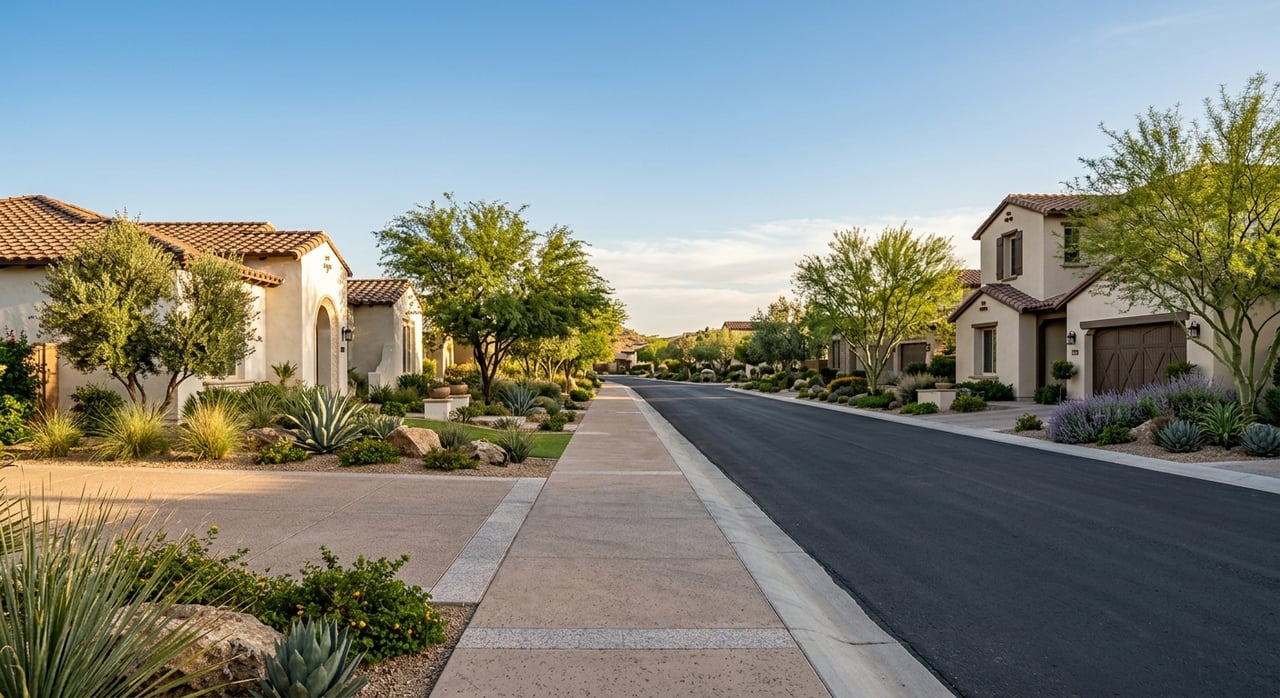
Summerlin also highlights curved streets in traditional villages, landscaped sidewalks, and eco-friendly lighting as part of the neighborhood character. These design choices help create a polished look across the community.
For homeowners, that often means exterior changes are not completely open-ended. Nevada Real Estate Division educational materials explain that visible exterior alterations generally must follow association procedures and should match the style of the community to the maximum feasible extent.
CC&Rs also matter here. Nevada materials explain that these recorded governing documents bind future owners and can limit how a property may be improved or changed.
Maintenance Expectations in Summerlin
Maintenance rules are not only about paint colors or architectural details. In Summerlin, landscape standards are also shaped by long-term water conservation efforts.
According to Summerlin’s environment information, the community began using desert landscaping in common areas in the late 1990s, adopted Water Smart guidelines in 2003, restricted front-yard grass in new construction, and continues replacing non-functional grass with desert-friendly plantings and drip irrigation.
That means the appearance and upkeep of outdoor spaces are often connected to broader community standards. Nevada HOA rules may also regulate practical details such as how trash containers are stored and whether they must be screened from view.
What Buyers Should Review Before Closing
When you buy in a Nevada common-interest community, the resale package is one of your most important due diligence tools. Nevada Real Estate Division materials state that the package should include the declaration or CC&Rs, bylaws, rules and regulations, information statement, current operating budget, current financial statements with reserve information, and a resale certificate showing current and expected fees, fines, assessments, late charges, interest, and other obligations.
The association must furnish the package within 10 calendar days after request, and it remains effective for 90 calendar days. Nevada also states that some resale-related fees may increase annually by CPI, but not more than 3 percent.
This is why it is so important to review documents for the exact property, not just the broader Summerlin name. Official guidance makes it clear that governing documents, fees, and restrictions are property-specific.
A Smart Summerlin Due Diligence Checklist
Before you move forward with a purchase, make sure you confirm the details that matter most for your lifestyle and budget.
- Identify every association tied to the property
- Ask whether the home falls under a master HOA, sub-association, or separate community
- Confirm which amenities are resident-only, public, or separately managed
- Review the CC&Rs, bylaws, and rules carefully
- Check the current budget and reserve information
- Review the resale certificate for fees, fines, and assessments
- Ask whether the property has a SID assessment
- Confirm whether there are extra restrictions tied to age-qualified or separately managed communities
This kind of review can help you compare homes more accurately. It can also give you a clearer picture of what ownership will actually feel like once you move in.
Why This Matters for Your Home Search
Summerlin offers a lot to love, but it is not a one-size-fits-all community when it comes to HOAs and amenities. Two homes in the same broad area can come with different rules, fee layers, and access to amenities.
If you are buying with lifestyle in mind, these details matter just as much as square footage or finishes. Knowing what you are paying for, what you can access, and what approvals you may need as an owner can help you choose the right fit with more confidence.
If you want clear guidance as you compare Summerlin neighborhoods, Baylee Collins can help you evaluate the details, understand what to look for, and move forward with clarity.
FAQs
What do HOA fees usually cover in Summerlin neighborhoods?
- HOA fees typically help cover shared expenses such as common-area maintenance, landscaping, amenity operations, reserves, management, and other association costs, depending on the specific property.
Are all Summerlin amenities included with every Summerlin home?
- No. Some amenities are resident-only, some are public, and some may be privately or separately managed, so access depends on the exact home and community structure.
Can you make exterior changes freely in a Summerlin HOA community?
- Usually no. Visible exterior changes typically must follow the association’s procedures, and governing documents may limit what changes are allowed.
What should buyers review before buying a home in Summerlin?
- Buyers should review the resale package, including the CC&Rs, bylaws, rules, budget, financial statements, reserve information, resale certificate, and any separate assessments tied to the property.
Are Siena and Sun City Summerlin part of the Summerlin Master Association?
- Official Summerlin materials identify Siena and Sun City Summerlin as separately developed and managed communities that are not part of the Summerlin Master Association.
What is a SID assessment in Summerlin real estate?
- A SID assessment is a separate property-owner charge used to fund public infrastructure such as roads, curbs, sidewalks, and utilities, and it is billed separately from HOA dues.