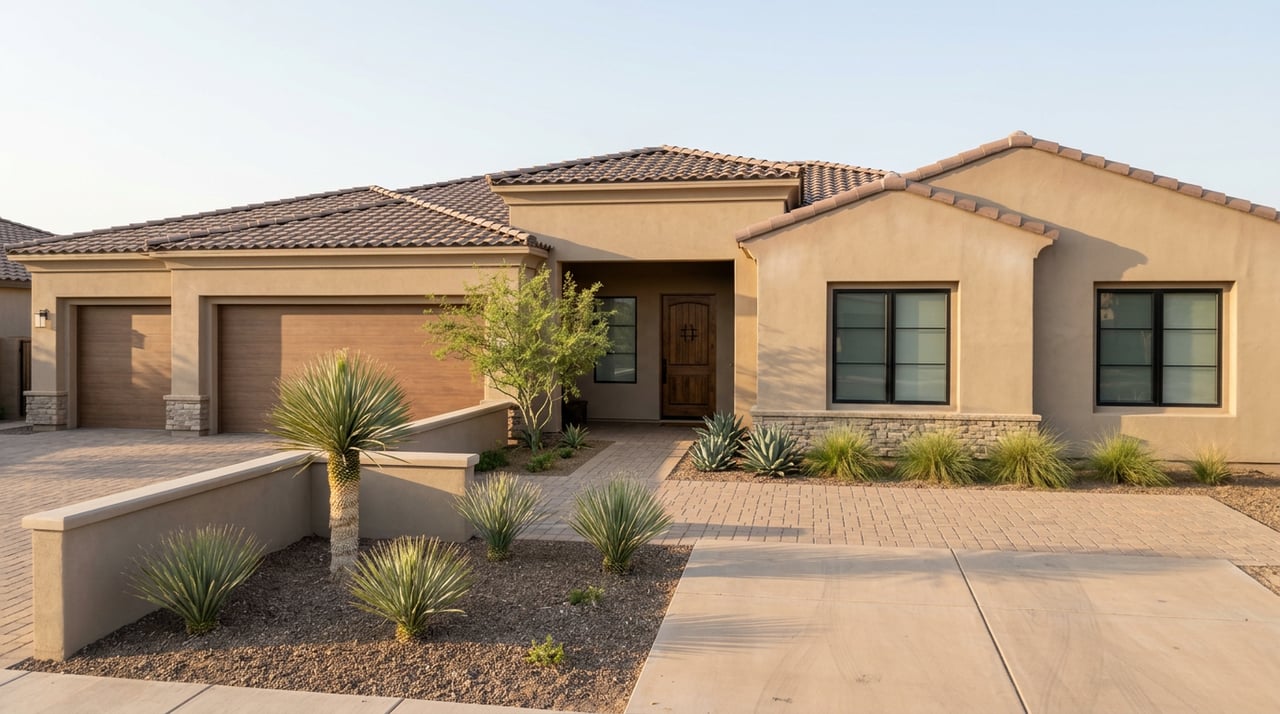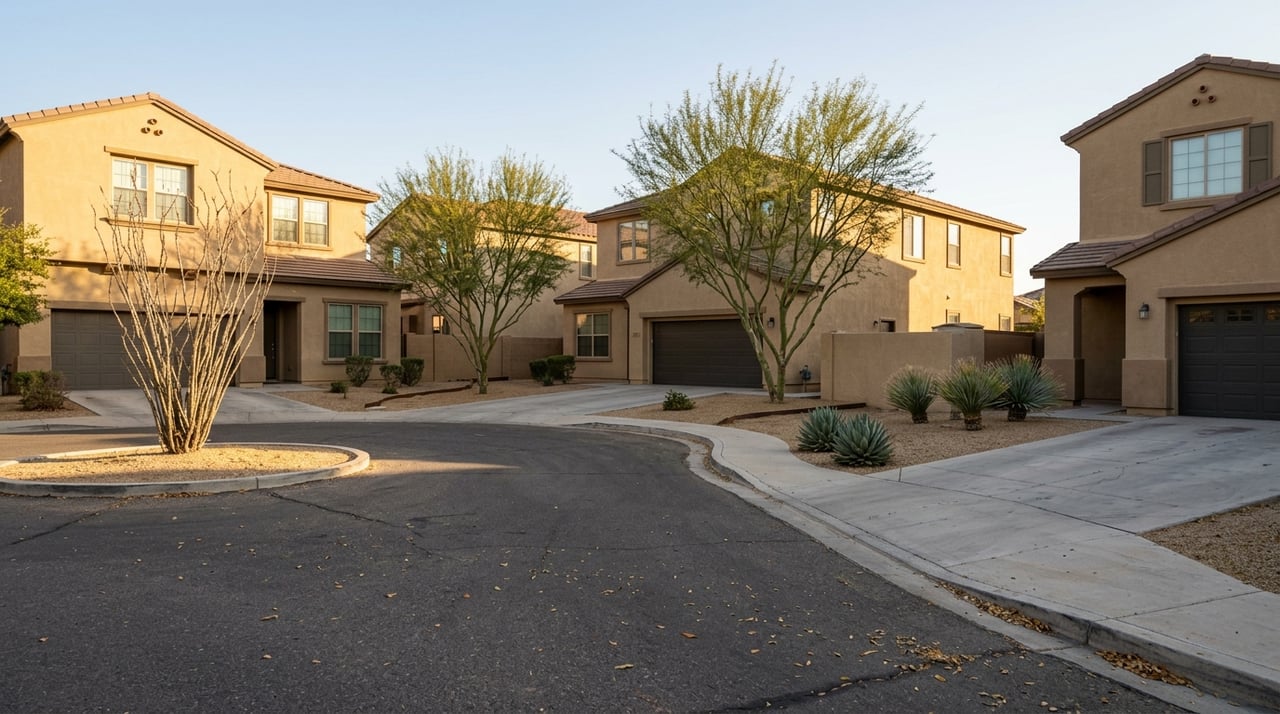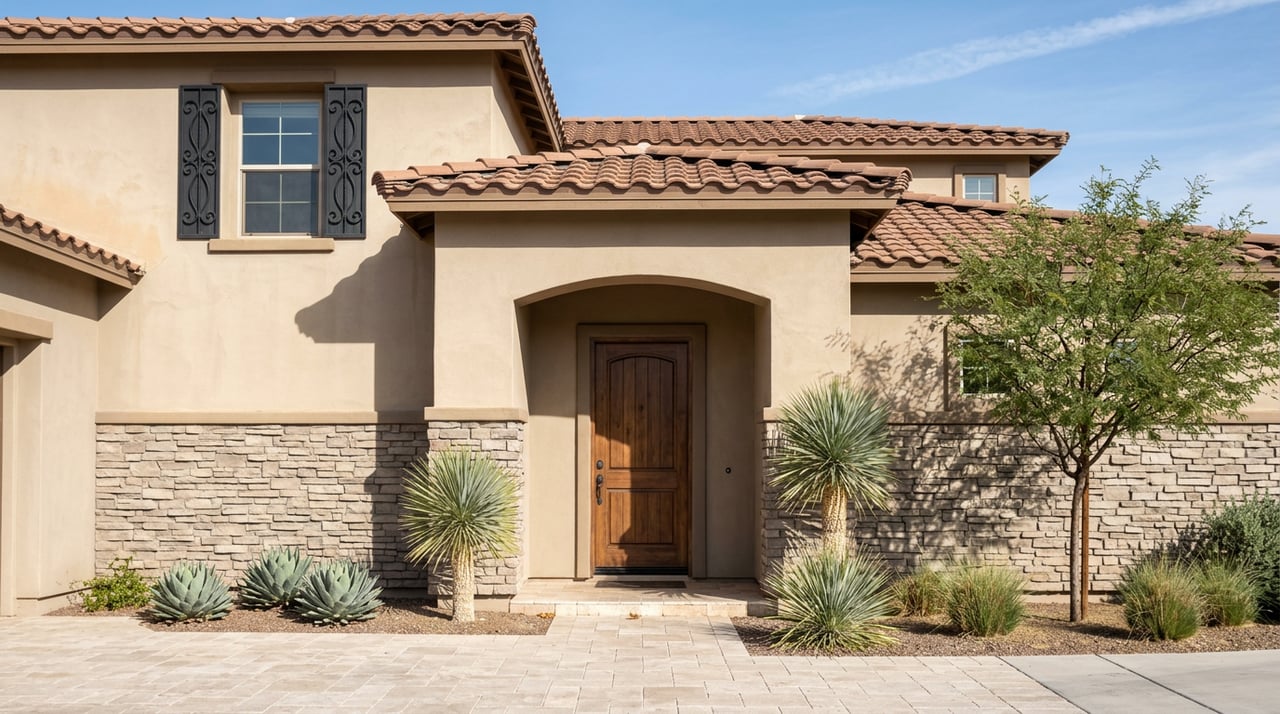
Picture two nearly identical listings a few miles apart in Henderson. Same builder era, same square footage, same $460,000 price tag. One sits in Cadence. The other sits in Inspirada. On paper, a buyer cross-shopping the two would call it a coin flip. Then the first Clark County tax statement arrives in August, and one household is writing a bigger check than the other, for reasons that have nothing to do with either house.
That gap has a name: a Special Improvement District or Limited Improvement District assessment, known around the valley as a SID or LID. It's a bond payment for infrastructure, streets, sewer lines, parks, that got built before the first home in a master plan ever sold. Instead of folding that cost into the sticker price, the local government issues bonds and repays them through an annual charge on every lot inside the district, typically over 10 to 20 years. In Henderson, the city bills its version as a LID. Clark County and the City of Las Vegas call the same mechanism a SID. The City of Henderson's finance department handles the billing on Henderson's side, and the charge lands on the property tax statement, not the HOA ledger, which is exactly why buyers scrolling listings by price never see it coming.
Even the professional guides disagree on this one
Here's where a straightforward story gets complicated in a way that's actually useful. Several 2026 Henderson buyer guides describe Cadence as carrying zero SID or LID debt, framing it as a structural advantage over Inspirada worth $100 to $150 a month. Other guides published this year, including one built around a live GLVAR feed as of May 2026, list Cadence right alongside Inspirada as a community where SID and LID assessments commonly add $1,200 to $3,600 a year to the tax bill.
Both can't be describing the same lot. And that's the point. Whether a specific Henderson address carries this assessment isn't a fact about the community. It's a fact about the parcel, the phase, and the bond district that parcel happened to fall inside when the infrastructure was financed. Two homes on the same street inside the same master plan can carry very different assessments, or none at all, because the districts were formed and bonded at different times as the community built out in stages. Ask a real estate professional what "Cadence's HOA fee" is and you'll get a number. Ask what Cadence's total carrying cost is, including any bond assessment, and the honest answer is: it depends which lot.
Inspirada makes the same point at the village level
Inspirada, Henderson's other flagship master plan, isn't one market internally either, and the price data from this year shows exactly why a single median is the wrong tool. In closed sales tracked from February through the first week of August 2026, Village 3, home to the gated enclaves of Alterra, Porta Di Ferro, and Milano, carried a median sale price of $775,000. Village 6, on the western edge and the busiest resale market by volume, was the best value on a per-square-foot basis at $230. Comparing Inspirada to another Henderson community using a single portal median is closer to averaging two different neighborhoods than describing one.
The same phase-by-phase logic applies to whether a given Inspirada home carries an LID assessment at all. Not every home does. Published estimates for the ones that do range from roughly $40 to $60 a month on the lower end to $150 to $250 a month in some community-wide overlays, a spread wide enough that it can only be explained by which pod and which bond issue a specific home sits inside.
What survives the closing table
For sellers, this isn't a one-time cost that disappears at the sale. Inspirada's own community FAQ states plainly that when a home sells, the remaining assessment balance transfers to the new owner. The lien stays with the land. A seller can't simply pay it off and walk away unless they choose to, and a buyer inheriting a home with 14 years left on a bond is inheriting 14 more years of payments, whether or not that number ever showed up in the listing description.
That has a practical consequence for anyone comparing entry-level new construction across the two communities right now. Cadence's entry tier for new construction starts around $425,000 to $430,000 as of July 2026, and as of a spring 2026 buyer guide, Inspirada's remaining new-construction inventory, down to roughly 75 to 120 homes across its final phases from KB Home, Toll Brothers, and Tri Pointe, starts near $420,000. Those two numbers are close enough to look interchangeable in a builder brochure. If one parcel carries an assessment and the comparable parcel doesn't, the real monthly gap stops being a rounding error and starts affecting what a lender will actually qualify a buyer for, since some lenders factor the annual assessment into debt-to-income calculations the same way they'd factor a second mortgage.
Where to actually find the number
The fix isn't complicated, but it does require going past the HOA disclosure sheet. Henderson's LID payments run through Assessment Management Group, and Clark County's parcel and tax records show whether a specific address carries an active assessment, the remaining balance, and the years left on the bond. Most buyers who find themselves carrying one also have the option to pay off the balance in a lump sum at closing instead of continuing the annual installments, which is worth running the math on if the remaining term is short or the interest rate on the bond is unattractive compared to other uses of that cash.
The smart way to compare two Henderson communities isn't to compare their reputations for having or not having this charge. It's to pull the actual AMG or Clark County record for the two or three specific homes a buyer is seriously considering, then divide any annual assessment by 12 and add it to the HOA line, so the comparison is apples to apples on true monthly carrying cost rather than list price.
The rest of the picture, briefly
Both communities are still adding infrastructure that matters for day-to-day life. Cadence has a new entertainment complex, Cadence Crossing, opening this year, along with a Boyd Gaming casino replacing the former Jokers Wild site. Near Inspirada, the Henderson Fieldhouse, a sports and recreation complex, is scheduled to open this fall, and Red Rock Resorts has a casino project underway nearby as well. Neither of those additions changes the assessment math on any specific lot, but they're part of why both communities keep drawing buyers who are cross-shopping the same $400,000 to $700,000 band in the first place.
A few questions worth asking before you tour
Does a SID or LID assessment affect what I can qualify for? It can. Some lenders include the annual assessment in the debt-to-income calculation used to determine loan approval, the same way they'd treat a recurring lien payment.
If I buy a home with an assessment, does it go away eventually? Only when the underlying bond is paid off, typically 10 to 20 years from when the district was formed, not from when you bought the home. Check the remaining term for the specific parcel, since two homes in the same community can be at very different points in that timeline.
Can I just pay off the balance instead of making annual payments? In most cases, yes. Buyers typically have the option to pay off the SID or LID balance as a lump sum at closing rather than continuing the annual installments, which is worth evaluating against the interest rate and years remaining on the bond.
If you're weighing Cadence against Inspirada, or any two Henderson communities where the sticker prices look close enough to call it a wash, the number that actually decides it usually isn't on the listing sheet. Baylee N Collins pulls the parcel-specific record before you write an offer, not after, so the comparison you're making is the real one. Let's Connect.